
Wildlife FAQs
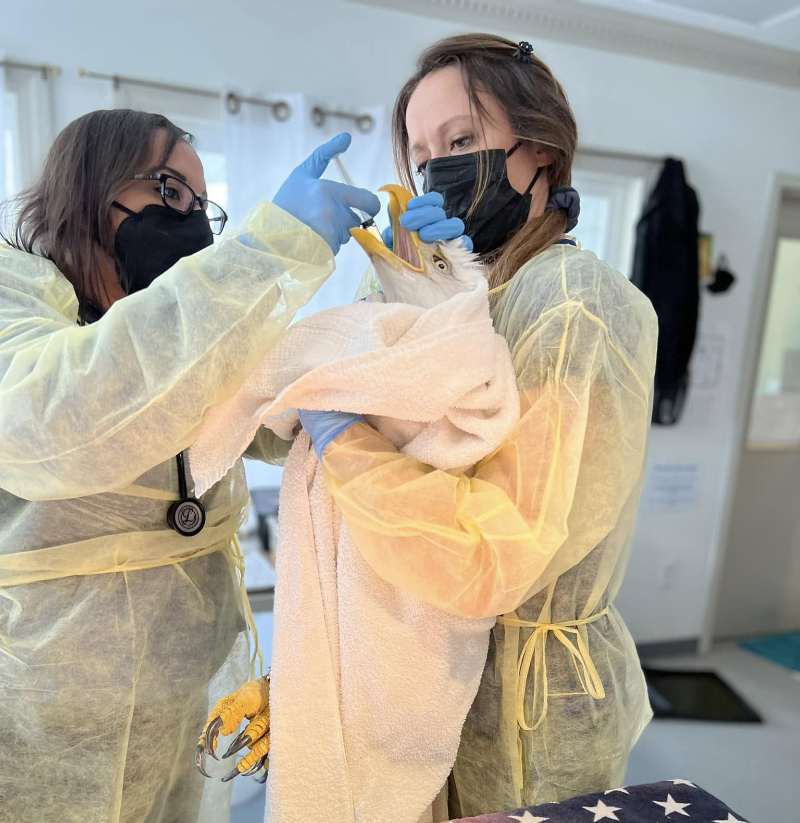
Wildlife Emergencies & Animal Rescue
When to leave an animal alone:
It is common to see wild baby animals outside during spring as a new generation makes its way into the world. Wild baby animals might seem like they need our help, but unless the animal is truly orphaned or injured, there is no need to intervene. Give us a call if you are unsure, and we can help guide you. Also please do not try to capture or handle any rabies vector species including raccoons, foxes, coyotes, bats, skunks, otters, woodchucks and fisher cats.
I found an animal, but you are closed. What do I do?
- Use common sense and think of your safety first
- Try to contain the animal if safe to do so
- Keep the animal warm and quiet until it can be transported and while it is being transported
- Do not pet or handle the animal
- Do not try to feed or give water to the animal
What is the process for admitting an animal?
Please call us first to discuss the situation. We can then advise on how to safely capture and transport the animal to our center.
I found a bird or turtle with a hook in its mouth, around it beak, stuck to its wing/foot etc. What do I do?
If you can contain the bird or turtle, do not remove the hook or fishing line. Bring the animal to us. You may cause more injury removing it, and there may be other internal hooks.
I found a dead animal. What do I do?
- If it is a dead opossum, check if it is a mother with babies in her pouch. If it is a mother, remove the babies, keep them warm and contact us as soon as possible.
- You can contact a trapper for removal (this is a paid service) or double bag the body to dispose of in your trash.
Rescuing a wild animal:
Never handle an adult animal without first consulting a wildlife professional. Even small animals can injure you. Once you’ve contacted someone who can help, describe the animal and his physical condition as accurately as possible. Unless you are told otherwise, here’s how you can make an animal more comfortable for transport:
- Put the animal in a safe container. For most songbirds, use a cardboard box or similar container. First, punch holes for air (not while the animal is in the box!) from the inside out and line the box with an old T-shirt or other soft cloth. Then gently place the animal in the box.
- Put on thick gloves and cover the animal with a towel or pillowcase as you scoop him up gently and place him in the container.
- Do not give the animal food or water. It could be the wrong food and cause him to choke, trigger serious digestive problems or cause aspiration pneumonia. Many injured animals are in shock, and force-feeding can kill them.
- Place the container in a warm, dark, quiet place—away from pets, children, and all noise (including the TV and the radio)—until you can transport the animal. Keep the container away from direct sunlight, air conditioning, or heat.
- Transport the animal as soon as possible. Leave the radio off and keep talking to a minimum. Because wild animals aren’t accustomed to our voices, they can become very stressed by our noises. If they’re injured or orphaned, they’re already in a compromised condition. Keep their world dark and quiet to lower their stress level and help keep them alive.
I found an animal. What can I put it in?
- An appropriately sized pet carrier or pet crate.
- Cardboard box with pre-made breathing holes at the top and bottom. The breathing holes should be big enough to fit your thumb in but not bigger.
- A plastic bin with a towel or a piece of cardboard (with pre-made breathing holes) as the lid.
- Always line the bottom with a soft absorbent material like paper towels, a bath towel, or an old shirt.
Unless you are told otherwise, here’s how you can make an animal more comfortable for transport:
- Put the animal in a safe container. For most songbirds, use a cardboard box or similar container. First, punch holes for air (not while the animal is in the box!) from the inside out and line the box with an old T-shirt or other soft cloth. Then gently place the animal in the box.
- Put on thick gloves and cover the animal with a towel or pillowcase as you scoop him up gently and place him in the container.
- Do not give the animal food or water. It could be the wrong food and cause him to choke, trigger serious digestive problems or cause aspiration pneumonia. Many injured animals are in shock, and force-feeding can kill them.
- Place the container in a warm, dark, quiet place—away from pets, children, and all noise (including the TV and the radio)—until you can transport the animal. Keep the container away from direct sunlight, air conditioning, or heat.
- Transport the animal as soon as possible. Leave the radio off and keep talking to a minimum. Because wild animals aren’t accustomed to our voices, they can become very stressed by our noises. If they’re injured or orphaned, they’re already in a compromised condition. Keep their world dark and quiet to lower their stress level and help keep them alive.
What happens to an animal after it is admitted to your Center?
The animal will receive a full examination and any necessary treatment with the goal of releasing it back into the wild.
A cat or dog caught an animal. Can I let it go?
NO. Please bring it to your nearest rehabilitation facility. There may be a puncture wound or broken bones.
What should I do if there's a wild animal in my house?
It’s best to call a local wildlife removal service or animal control. They have the training to handle these situations safely.
Baby Animals
I found a baby Opossum; What do I do?
Bring it to us or any other wildlife rehabilitation center if the baby is smaller than 7 inches (typically the length of your middle finger to wrist).
If it is larger than 7 inches and moves well with no wounds, it no longer needs a parent. He/she can be released back into the wild.
What is a fledgling?
- A fledgling is a bird that is almost completely covered in feathers (not fluffy down) and looks like an awkward version of an adult.
- Fledgling birds hop out of the nest onto the ground. Then they learn to fly from the ground up.
- It may take a few days for a fledgling to fly away completely.
- Parents will continue to feed a fledgling while they are on the ground.
I found a baby rabbit. What do I do?
If the rabbit is uninjured and its eyes are open, it’s likely fine. If it appears injured or is very young (eyes closed), please contact us.
I found a baby deer (fawn). What should I do?
If the fawn is uninjured and not in immediate danger, it’s best to leave it alone as the mother is likely nearby. If it’s injured or the mother doesn’t return within 24 hours, please contact Mass Environmental Police.
I found a baby bird. What do I do?
- Call us during our business hours. After hours, keep the bird in a warm dark area. Do not feed or offer water.
- If the baby looks healthy (no blood, no ants, no wounds, not colder than your hand), look for a nest near where you found it and place the baby back in the nest.
- If the nest is too high, try nailing a basket to the tree in a shaded area near the original nest. Fill the basket with leaves. Come back in an hour and check for fresh poop.
- If the bird is covered with feathers, no fluff, and looks like a smaller version of the adult, this may be a fledgling learning to fly. Leave it where it is because the parents are taking care of it.
I found a baby squirrel. What do I do?
If the baby is warm, in not covered in bugs (ants, flies, fleas), does not have a wound, and was not caught by an animal, it can possibly be reunited with its mother.
- First, place the baby on the ground where you found it.
- Make sure all children and pets are inside or far away. You do not want to scare mom.
- On your cell phone, go to YouTube and play as loud as possible
Leave phone near the baby and step away. This may take several attempts.
NEVER FEED THE BABY
If mom doesn’t pick up after 24 hours of trying, please bring the baby squirrel to us.
I found a nest with eggs, what should I do?
If the nest is not in immediate danger, it’s best to leave it alone. If you think it’s abandoned or at risk, please call us for advice.
Handling & Transporting Wildlife
How do I pick up a small bird?
Scoop the bird with both hands by placing one hand on each side, covering each wing with your hand. Have the box/carrying container close by, and place the bird on a pillowcase or paper towel.
How do I pick up an adult squirrel?
- Wear the thickest gardening gloves you own. Place a thick towel over the whole squirrel, but make sure to cover the head. Place your fingers behind the head, stabilizing the head and jaw. This should feel like you are pinching the jaw from behind but not restricting airflow. With the other hand, pick up the back end. Now, place it in a pet carrier. Cardboard boxes are not preferred for squirrels since they easily chew their way out.
- If you are unable or do not have access to gloves, you can place a carrier in front of the squirrel. With a cardboard box or towel, guide the squirrel into the carrier.
How do I pick up a large bird?
- Toss a large blanket, sheet, or towel over the bird, making sure to cover the head. Make sure to firmly hold the bird with the sheet over the bird by placing one hand over the middle section of each wing.
- Your grip should be firm but not tight. Imagine holding a squirmy baby.
How do I pick up an adult opossum?
- DO NOT pick up by the tail, and do not offer food or water.
- Tilt a box on its side, and guide the opossum into the box using the other hand.
- If the opossum is lying on its side, you can cover him/her with a towel, place one hand at the base of the tail and the other under his/her neck. Then slide it into the box.
- If the opossum is dead, check to see if it’s a mother with babies in her pouch. It is best to remove the babies and keep them warm until you can transport them to a rehabilitator.
Birds
A bird flew into my window. What should I do?
Never offer it food or water. Bring the bird in if there is blood, any body part is limp, or it does not start to recover after 15 minutes.
Otherwise:
- If the bird is in a safe place, you can leave it there and monitor its recovery
- If cats, dogs, or small children are around, place the bird in a shoebox. Put the shoebox in a quiet place.
- Release it back where you found it if the bird is very active and vocal after one hour. If not fully recovered after an hour, call us.
What should I do if there's a bird nest in my chimney/vent?
It’s best to contact a professional to safely relocate the nest.
How can I stop birds from hitting my windows?
Applying decals or bird tape to your windows can help birds see them and prevent collisions.
I have a bird feeder in my yard and noticed a sick bird. What should I do?
Please remove your bird feeder temporarily to prevent the spread of disease, and contact us for further advice.
Wildlife Encounters & Safety
There is a raccoon in my yard. Will I get hurt?
- If you give the raccoon some space, it should move on. Mother raccoons with very small babies will look for food during the day.
- If the raccoon is not moving or acting sick, call animal control first and then us during business hours.
- If you feed cats outside, you are inviting all wildlife to a free meal.
A bird flew into my window. What should I do?
Never offer it food or water. Bring the bird in if there is blood, any body part is limp, or it does not start to recover after 15 minutes.
Otherwise:
- If the bird is in a safe place, you can leave it there and monitor its recovery
- If cats, dogs, or small children are around, place the bird in a shoebox. Put the shoebox in a quiet place.
- Release it back where you found it if the bird is very active and vocal after one hour. If not fully recovered after an hour, call us.
What should I do if I find an injured bat?
Please do not handle bats yourself due to the risk of rabies. Contact us or your local wildlife rescue immediately.
I've found a snake and I don't know if it's venomous. What should I do?
Don’t attempt to handle the snake. Keep a safe distance and contact a professional for assistance.
I think someone is poisoning animals. Who do I report it to?
Your local police department, animal control office, or Massachusetts Environmental Police.
There is a raccoon in my yard. Will I get hurt?
- If you give the raccoon some space, it should move on. Mother raccoons with very small babies will look for food during the day.
- If the raccoon is not moving or acting sick, call animal control first and then us during business hours.
- If you feed cats outside, you are inviting all wildlife to a free meal.
A bird flew into my window. What should I do?
Never offer it food or water. Bring the bird in if there is blood, any body part is limp, or it does not start to recover after 15 minutes.
Otherwise:
- If the bird is in a safe place, you can leave it there and monitor its recovery
- If cats, dogs, or small children are around, place the bird in a shoebox. Put the shoebox in a quiet place.
- Release it back where you found it if the bird is very active and vocal after one hour. If not fully recovered after an hour, call us.
Living with Wildlife
How can I prevent wildlife from coming into my yard?
The best way to deter wildlife is to remove attractants such as pet food, bird feeders, and unsecured trash cans.
How do I prevent animals from getting into my trash cans?
Using a secured or wildlife-proof trash can will help deter wildlife. Also, try to put your trash out as close to pickup time as possible.
How can I help protect wildlife in my area?
You can help by keeping your distance from wildlife, keeping your yard clean and free of trash, and educating others about the importance of wildlife conservation.
How do I deter snakes from my yard?
Keep your yard clean and free of debris where snakes might hide. A professional can provide safe removal if a snake is already present.
I want to start a wildlife garden. Do you have any tips?
Yes, planting native plants, providing fresh water, and leaving dead trees for nesting can all create a wildlife-friendly garden.
Wildlife Rehabilitation & Conservation
Why is it important to rehabilitate wildlife?
Rehabilitation helps to ensure the health and survival of wildlife populations. Each species plays a vital role in maintaining balanced and healthy ecosystems.
Can I release a rehabilitated animal?
The release of rehabilitated animals should only be done by trained staff or volunteers to ensure the safety of the animals.
How does the New England Wildlife Centers help with conservation efforts?
We contribute to conservation by rescuing, rehabilitating, and releasing native wildlife, and through education and advocacy efforts.
Can I keep a wild animal as a pet?
It is illegal and harmful to keep wild animals as pets. They have specialized needs and should live in their natural habitats.
What happens to animals that cannot be released back into the wild?
Some animals that cannot be released may become educational ambassadors, while others may be placed in approved sanctuaries. For animals that would have a poor quality of life in captivity humane euthanasia may be considered.
How do I become a wildlife rehabilitator?
Becoming a wildlife rehabilitator requires special training and licensing. We recommend taking wildlife rehabilitation courses and gaining hands-on experience through volunteering.
Wildlife Center Services
What types of animals do you care for at the Center?
We care for a wide variety of wildlife including birds, mammals and reptiles.
Do you rehabilitate marine mammals or sea turtles?
No special licenses are required to rehabilitate marine mammals and sea turtles but we can provide resources to groups who provide those services.
Do you provide veterinary services for pet animals?
Yes! Our wildlife hospital is focused solely on the rescue, rehabilitation and release of wildlife but we also operate The Odd Pet Vet which cares for exotic pets, no cats or dogs.
Do you take in exotic or non-native species?
Our main focus is native wildlife. For exotic or non-native species, we recommend contacting a specialized rescue or sanctuary.
Do you have animals available for adoption?
No, we do not adopt out any of the wild animals that come into our care. Our goal is to return them to their natural habitats.
Do you treat all species of Wildlife?
We treat a wide variety of native wildlife. However, due to certain regulations and specializations, there are some exceptions. Please call us to discuss the specific animal you’ve found.
Can you help with wildlife outside of Massachusetts?
It is Illegal to transport wildlife across state lines so please contact a wildlife hospital or rehabilitator within the state you found the injured wild animal. If you need help finding resources please give us a call.
Do you provide care for domestic/feral cats and dogs?
We focus on wildlife. For domestic animals, we recommend contacting a local animal shelter or rescue group.
Whats the difference between the New England Wildlife Center and other animal shelters?
Unlike animal shelters that primarily focus on domestic pets, we specialize in the rescue and rehabilitation of wild animals.
Visiting & Contacting the Center
What are your hours of operation?
Our hours of operation vary by season. Please visit our website for the most up-to-date information.
I have a wildlife-related question but don't have an emergency. Can I still call?
Yes, we are happy to answer any wildlife-related questions you may have.
Are you open on weekends/holidays?
Due to limited staff we may have limited admission hours on weekends and holidays so always be sure to call first before coming with an animal.
Do you offer tours of your facility?
Yes! There are limitations due to the nature of our work but we do offer opportunities for tours of our center. You can learn more on our website.
Education, Careers & Volunteering
Can I do a school project, report, or eagle scout project with New England Wildlife Center?
Yes! We encourage educational projects. To start please contact us to arrange any necessary supplies, interviews or visits.
Do you have any job openings?
All job openings are posted on our website.
Do you offer wildlife education programs for schools or groups?
Yes, we offer a variety of educational programs! Please visit our website or call us for more information.
Do you have a newsletter I can subscribe to?
Yes, you can subscribe to our newsletter through our website to stay updated about our work and events.
Donations & Support
How can I donate to New England Wildlife Centers?
You can donate through our website, or by mail.
Do you have a wish list for donation of goods?
Yes, we have a wish list on our website. We appreciate all donations!
Are there opportunities for corporate partnerships or sponsorships?
Yes, we welcome corporate partners and sponsors. Please contact us for more information.
How is the New England Wildlife Center funded?
We rely on the generous donations of individuals, businesses, corporations and from grants for our funding.
Is my donation tax-deductible?
Yes, all donations to the New England Wildlife Centers are tax-deductible to the extent permitted by law.
Can I sponsor a specific animal at your Center?
Yes, we have a sponsorship program. Please visit our website for more details.
Can I host a fundraiser to benefit New England Wildlife Centers?
Yes, we greatly appreciate community fundraisers. Please contact us to coordinate.
Policies & Ethics
Do you euthanize animals?
Our primary goal is to rehabilitate and release animals. However, in cases of extreme suffering where rehabilitation is not possible, humane euthanasia may be considered.